
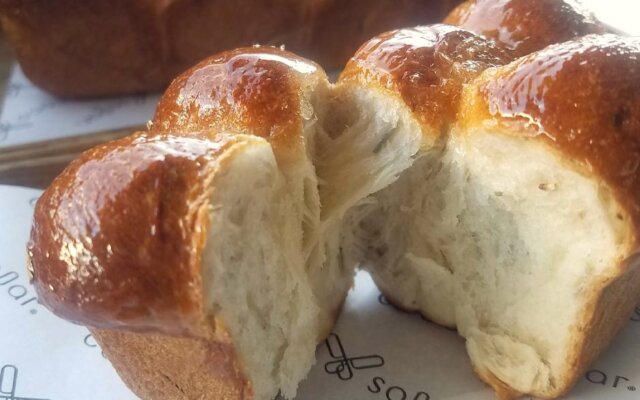
Mosbolletjie is a sweet bread flavored with aniseed that was traditionally made during the wine harvest using leftover ‘grape must’, one of the many traditions brought by French Huguenots families who settled in the Cape Winelands in the late 1600s.
By Coco Safar
21 April 2026
In 1688, around 175 French Huguenots, who were Protestants persecuted under Catholic rule in Europe, fled to what is now South Africa, aided by the Dutch East India Company known as VOC (Vereenigde Oostindische Compagnie). The imperial merchant power had founded Cape Town just three decades earlier as a supply station for its ships headed farther east. The Company sought experienced farmers to cultivate the land of the Western Cape province. It supported the French Huguenots because of their shared Protestant beliefs, but also because it needed people with expert knowledge in viticulture to supply its ships with wine.
The Huguenot families settled in the Cape Winelands area, where they put their winemaking experience to use. During the harvest season, they made mosbolletjies, buttery, brioche-like buns leavened with the fermenting must — a mixture of pressed grape juice, seeds, skins and stems — produced during the early stages of winemaking.
These “must buns” were flavored with whole aniseed, and were typically served with butter and moskonfyt, a jam also made from must. Over time, it became a traditional early morning treat served fresh with black coffee – similar to the French tradition of serving black coffee and croissants.
Nowadays, mosbolletjies can still be found year round in traditional South African bakeries. Outside of the grape harvest, when there’s no must available, bakers substitute it with a liquid made by fermenting raisins, or use plain grape juice and regular yeast. The sweet, pull-apart bread is best eaten hot from the oven, but if leftovers survive, they’re dried as rusks to enjoy with copious cups of coffee of tea, a continuing South African loving and most comforting ritual.
The name, Afrikaans in origin, is a combination of mos (Afrikaans for partially fermented grape juice) and bolletjies (Afrikaans for “balls” or “buns”).
Must is one of the wonderful by-products of the wine grape harvest that does not only have a rich history but is also a versatile seasonal ingredient in cooking since ancient times. The name comes from the Latin vinum mustum meaning ‘young wine’.
In ancient Greece, must was used as a sweetener in the kitchen and as a syrup over pancakes. From the Greeks, the Romans in Ancient Rome also used the condensed must in cooking, as a sweetener. Must was boiled in lead or bronze kettles into a milder concentrate called defrutum or a stronger concentrate called sapa. It was often used as a souring agent and preservative, especially in fruit dishes. One of the earliest references to bread baked with must is during the reign of King Edward I (1272-1307).
Nowadays, reduced must is used in Greek and other Balkan countries, French and Middle Eastern cuisines as a syrup known as petimezi, pekmez or dibs. In Greece, petimezi is a basic ingredient for a must-custard known as moustalevria and a sweet-meal known as soutzoukos. The moustokouloura or “must cookies” are also popular Greek cookies, which are based on a sweet dough made by kneading flour, olive oil, spice, and must. In Modena, Italy, cooked must is also an essential ingredient in the production of balsamic vinegar.


